

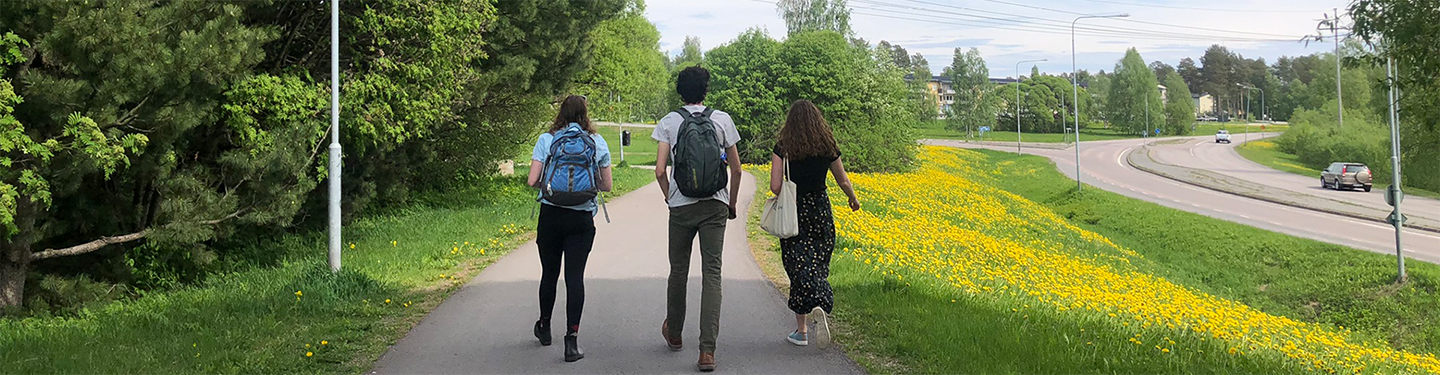
Student Research on Sweden’s Energy Transition (SWEET)
Introduction
SWEET engages a cohort of 8 undergraduate and graduate students from DC-area universities in a collaborative and interdisciplinary research experience spanning the spring and summer. Students work closely with faculty mentors at the Luleå University of Technology (LTU), Sweden’s northernmost university, to investigate the challenges and opportunities in Sweden’s green energy transition. Students explore questions such as: How will we power the industries of the future? How can we balance tensions between political priorities, labor and environmental variables, and technological possibilities in the green transition?
Selected students participate in a 3-credit course in research methods in Washington, D.C., during the spring semester before traveling to Luleå, Sweden for 5 weeks in the early summer to support ongoing research. Upon returning to the U.S., students spend the rest of the summer synthesizing their findings.
Applications to join the 2027 cohort will open in September 2026.
Application Guide
This page is supplemental to the materials published on the NSF Education and Training Application Platform (ETAP). Please refer to the official ETAP program page for full application instructions, deadlines, and required materials.
The 2027 SWEET cohort will engage 8 undergraduate and graduate students in a collaborative, interdisciplinary research experience with faculty mentors at Luleå University of Technology (LTU), spanning spring and summer 2027.
Register for Info Session 1: Tuesday, September 15, at 6 p.m.
Register for Info Session 2: Wednesday, September 23, at 12 p.m.
Research Themes
Research activities are organized into four themes, with two to three students focusing on each. A faculty supervisor guides the overall direction of research within each theme, while individual students develop their own project connected to it.
- Green Industrial Transition & Regional Business Ecosystems
- People & Places: Attracting, Retaining, and Housing a Green Workforce in the Arctic
- Energy, Materials & Climate Resilience (Technical Sustainability)
- Communication & Public Perception of the Green Transition
Topics of Interest
Review the topics below and select one to address in your research proposal. Your selected topic will be used to help pair you with an LTU faculty mentor working in that area.
Green Industrial Transition & Regional Business Ecosystems
- How large-scale investment in fossil-free steel, renewable energy, mining, and battery industries reshapes regional business ecosystems, partnerships, and capabilities in Northern Sweden.
- Mapping and categorizing emerging business models tied to the green transition: how firms create, deliver, and capture value, and how this depends on collaboration and circular resource flows.
- Regional planning's role in managing the pressures of green industrial development.
- Long-term land-use conflict and cooperation in the mining sector (e.g., mining vs. reindeer herding), including GIS-based mapping of competing uses.
- Uranium mining in northern Sweden: place-based attitudes towards proposed mining development, uranium vs. non-uranium mining, connection to nuclear energy.
People & Places: Attracting, Retaining, and Housing Talent in the Arctic
- Arctic municipal strategies for talent attraction and retention, tied to national and migration policy (Talent North project).
- Affordable housing as a lever for securing industrial development.
- Regional planning's role in translating large-scale industrial investment into lasting local benefits.
Energy, Materials & Climate Resilience (Technical Sustainability)
- Energy and water stress mapping for EU data centers; sustainability of digital twins used to optimize power grids.
- How professionals across metal and materials value chains perceive and navigate the shift to lower-emission, circular production, including the potential for scaling on-site heat reuse (focused on Swedish steel).
- Scrap-based steel production: metallurgical, economic, and environmental implications of increased post-consumer scrap use.
- Climate adaptation for small rural municipalities, moving from fragmented infrastructure to integrated, resilient, low-carbon systems (SMART project).
Communication & Public Perception of the Green Transition
- Corporate and political communication on the green transition in the media: identify different communication strategies and develop an experiment to deploy during their visit.
- Media analysis of political strategies on the green transition: compare the use of strategies in political speeches and media, and develop an experiment to deploy during their visit.
Check Your Eligibility
Please check your eligibility to participate. As noted on the program's ETAP page, eligible applicants must be enrolled at a college or university within the Consortium of Universities of the Washington Metropolitan Area, including:
- Participating Consortium of Universities of the Washington Metropolitan Area
- American University
- The Catholic University of America
- Gallaudet University
- George Mason University
- Georgetown University
- The George Washington University
- Howard University
- Marymount University
- National Defense University
- National Intelligence University
- Northern Virginia Community College
- Prince George's Community College
- Trinity Washington University
- Uniformed Services University
- University of the District of Columbia
- University of Maryland
Apply Now on ETAP
Program Timeline
Program Structure
- Students take an in-person 3-credit course in research methods at GW's Foggy Bottom campus during the spring semester.
- Students then travel to Luleå, Sweden for 5 weeks in early summer to support ongoing research with LTU faculty mentors.
- Upon returning to the U.S., students spend the rest of the summer synthesizing their findings.
Timeline
Key Events | Date |
| 2027 Cohort Applications Open | September 4 |
| Applications Due | October 5 |
| Decisions | Late October |
| Spring Course (start–end) | January 11 - May 1 |
| Time in Sweden | Tentatively Mid May - Late June, 2027 |
Two Online Information Sessions:
Tuesday, September 15, at
Wednesday, September 23, at
Contact Bob Orttung at rorttung gwu [dot] edu with questions
Project Team
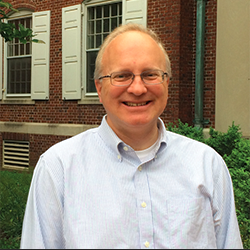
Robert Orttung
The George Washington University

Caitlin Grady
The George Washington University
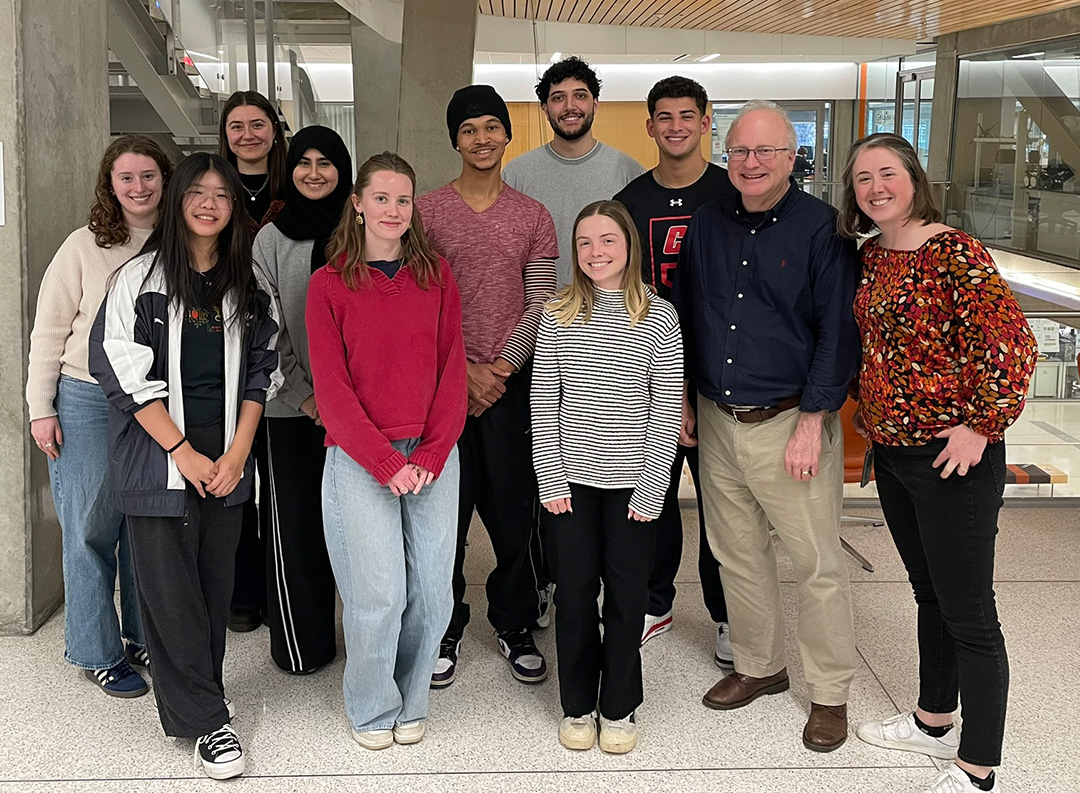
2026 SWEET Cohort
- Mark Achkar is a junior at the George Washington University studying Biology with a minor in International Affairs.
- Aiden Clair is a sophomore at Howard University studying Political Science with a minor in Biology.
- Sophia Colby is a senior at George Mason University studying Environmental & Sustainability Studies with a minor in Social Justice & Human Rights.
- Bridget Kinnaman is a senior at the George Washington University studying Data Processing and Geography with a minor in GIS.
- Amna Maqsood is a senior at the George Washington University studying Systems Engineering and Data Analytics with a minor in Sustainability.
- Madelyn McCarthy is a senior at the George Washington University studying Environmental and Sustainability Science with minors in Business and Geography.
- Gabriel Ruiz is a junior at Catholic University studying Environmental Engineering with a minor in Ecology.
- Michelle Wang is a junior at Georgetown University studying Science, Technology, and International Affairs with a minor in Environmental Science.