


The Paris Climate Agreement 10 Years On:
What’s Changed, What’s Next?
On December 9, the GW Alliance for a Sustainable Future partnered with the Embassy of France in the U.S. to host a timely conversation on international collaboration for climate action. Marking ten years since the Paris Agreement, the event Paris Climate Agreement 10 Years On: What’s Changed, What’s Next?, held at the Maison Française, marked progress and challenges in the last decade and followed COP30 in Belém, Brazil.

See How Paris Changed the World!
Watch the full event, and explore each panel from Paris Climate Agreement 10 Years On: What’s Changed, What’s Next?

Updates from Planet Forward
Big news coming soon! Check back here for coverage from Planet Forward.

Updates from GWToday
Check back here for coverage from GWToday.
Dig in to hear from policymakers, diplomats, climate experts, NGOs, and students as they share insights from the last ten years of international climate negotiations and COP30, and explore bold solutions for a planet on the brink of transformation.
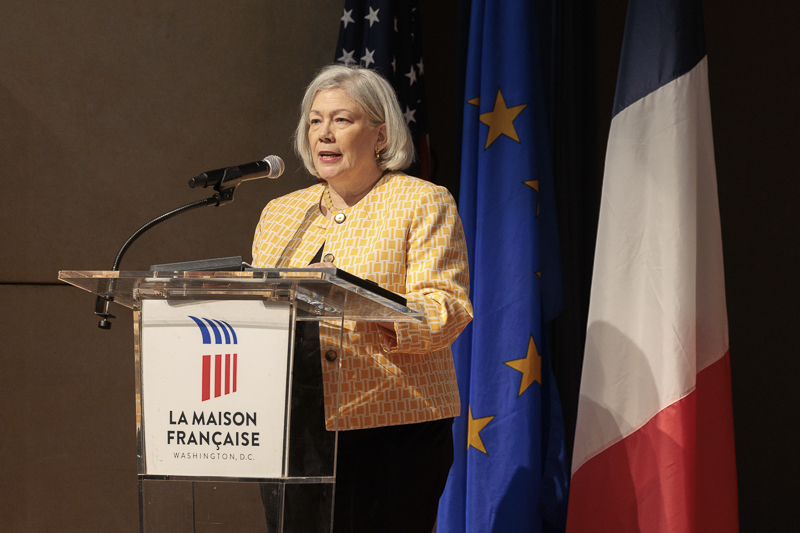
A Welcome to the Embassy
The event began with remarks from His Excellency Laurent Bili, Ambassador of France; Her Excellency Maria Luisa Ribeiro Viotti, Ambassador of Brazil; and GW President Ellen M. Granberg, emphasizing the importance of global collaboration and a shared commitment to a sustainable future.

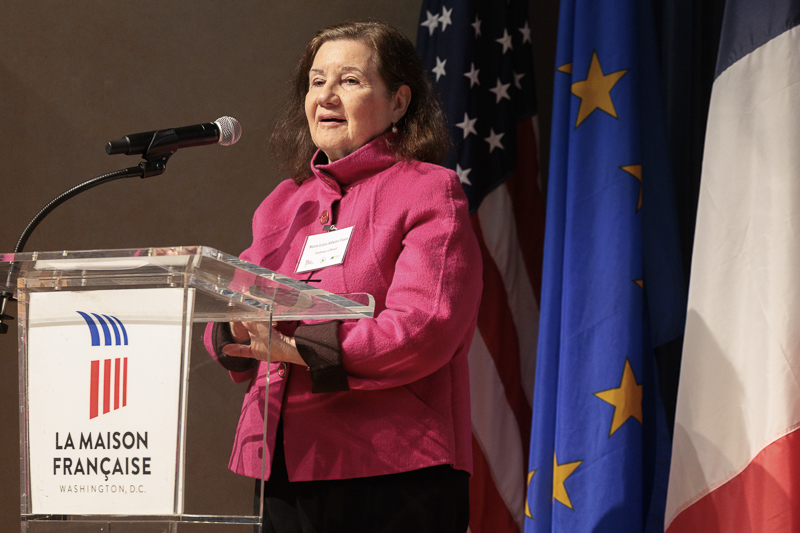
"When You Describe the Problem Accurately, You Describe Its Solution"
Sen. Sheldon Whitehouse of Rhode Island delivered a passionate keynote address criticizing the vast sums spent to sway public opinion and warning that corporations continue to evade accountability for pollution. His remarks underscored the urgent need to confront the influence of money in climate policy.

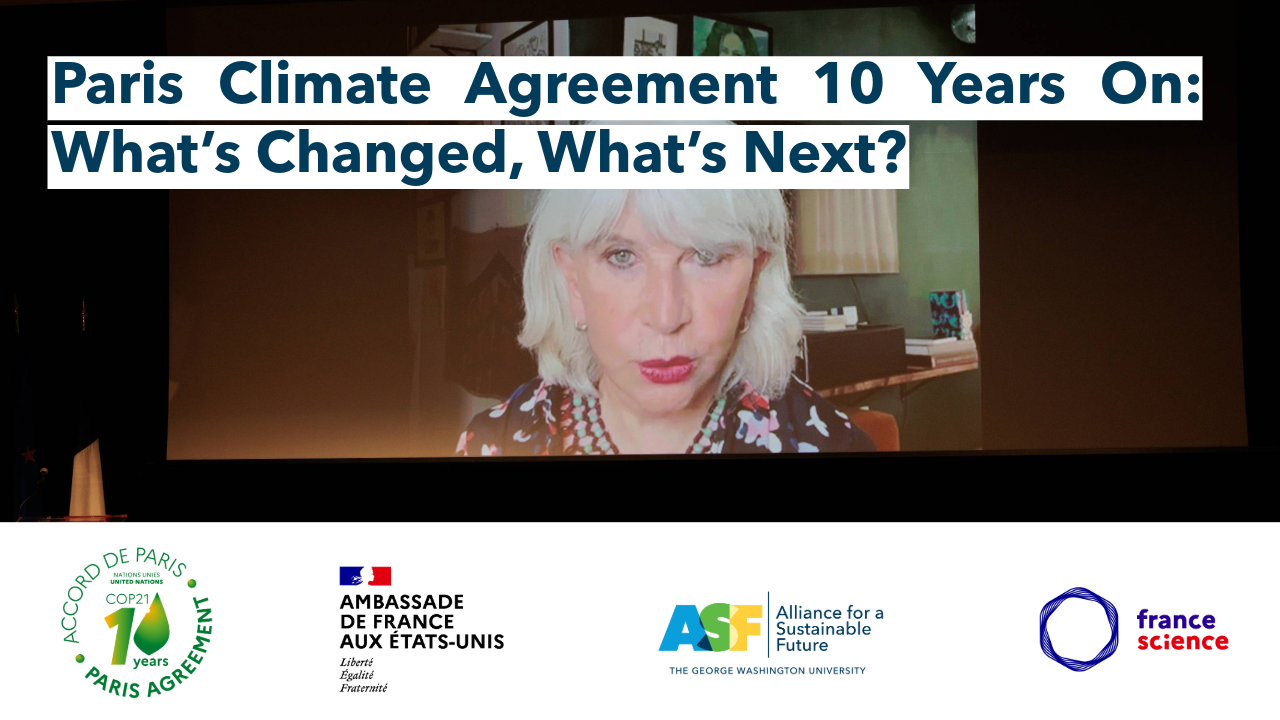
Context, Stakes, and Significance of Paris
Laurence Tubiana, French Ambassador during COP21, reflects on the context, stakes, and lasting significance of the Paris Agreement, drawing on her pivotal leadership role in global climate action.
A Decade Since Paris, What Have We Learned?
This discussion, moderated by Frank Sesno, Executive Director of the GW Alliance for a Sustainable Future, focused on what has changed, progressed, and stalled since the Paris Agreement, highlighted achievements, challenges, and the steps needed to accelerate climate action. The panel featured insights from Sue Biniaz, Former Principal Deputy Special Envoy for Climate and Senior Fellow at Yale University; Ani Dasgupta, President and CEO of the World Resources Institute; Pierre Gentine, Professor of Earth and Environmental Sciences and LEAP Director at Columbia University; and Adelle Thomas, Vice-Chair of IPCC Working Group II and Senior Director of Climate Adaptation at the Natural Resources Defense Council.

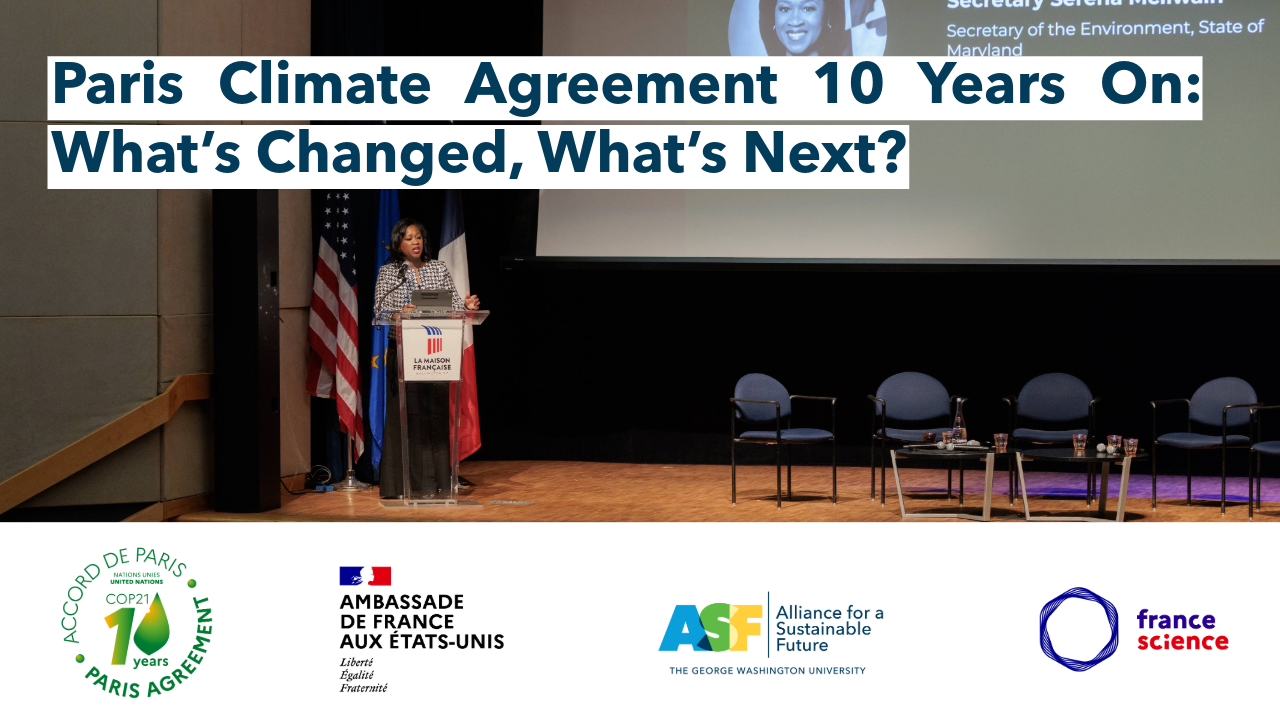
How Can the U.S. Take Action at the State Level?
State leaders are translating the vision of the Paris Agreement into concrete action at the local level. In this keynote address, Serena McIlwain, Secretary of the Environment for the State of Maryland, shares how Maryland is incorporating the path laid out in Paris to drive ambitious climate policies and sustainable progress.
The State of Climate Action
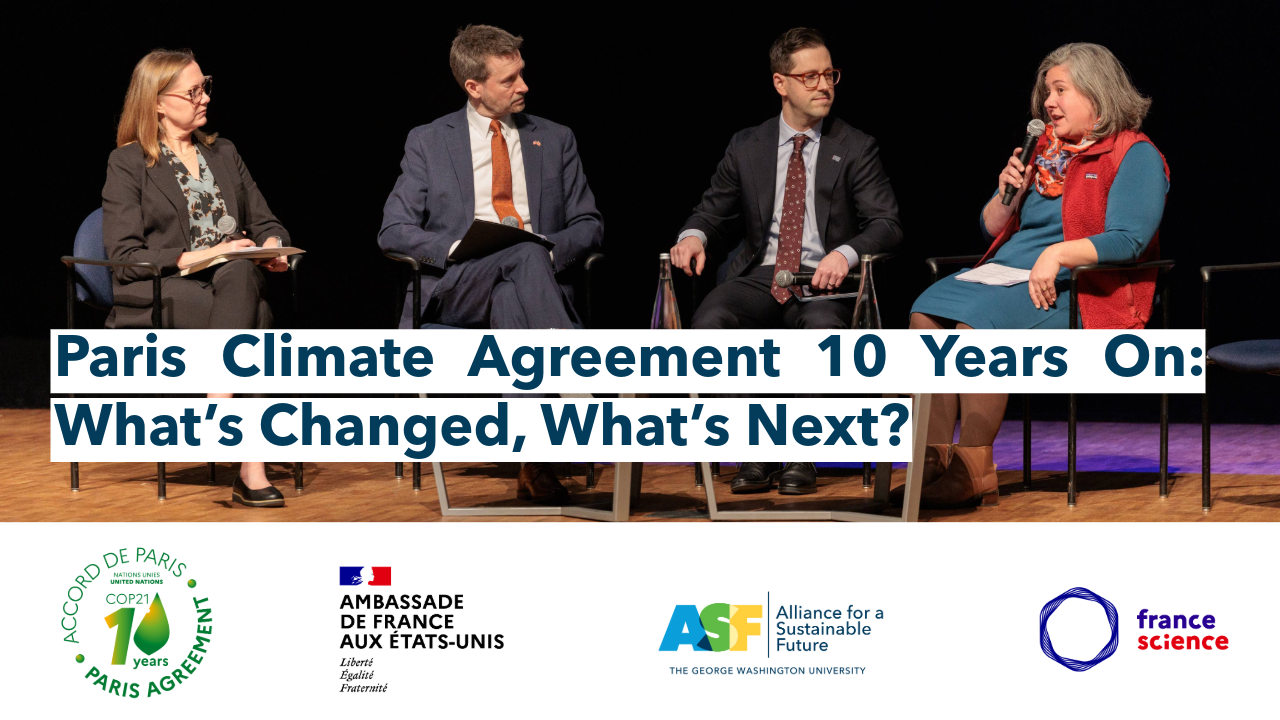
Moderated by Lauren Risi, Senior Fellow and Director of the Environmental Security Program at the Stimson Center, this session explored how initiatives by private organizations and local governments can turn the commitments made at COP into real-world solutions. The panel featured insights from Charles Allen, DC Ward 6 Council Member and Chair of Transportation & Environment; Rebecca Goodstein, Patagonia Activism and Grants Manager; and Casey Katims, Executive Director of the US Climate Alliance.
Voices from Belém
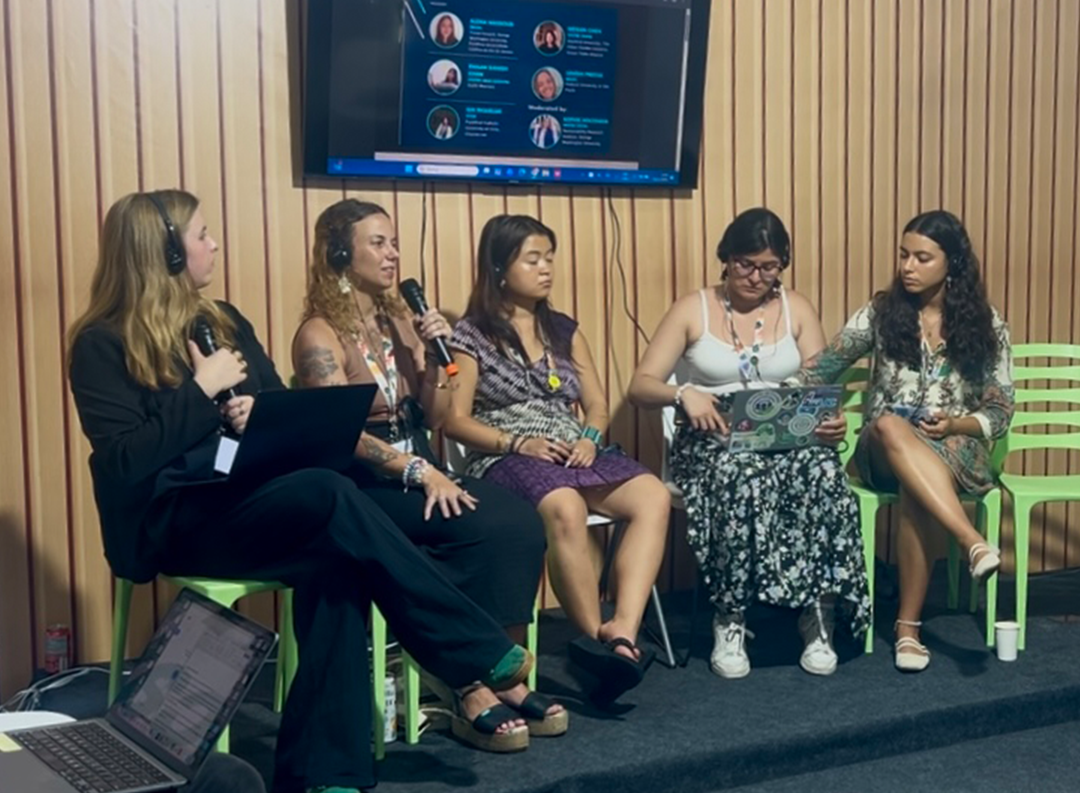
To connect local realities to global commitments, the event featured insights from COP30 and vital student voices shaping climate negotiations. Robert Orttung, Director of the Sustainability Research Institute, and Paulo Cezar Braga, Head of the Science & Technology Office at the Embassy of Brazil in the United States, shared perspectives on how on-the-ground experiences and youth engagement influence global climate action.

How Does the Public Feel About the Paris Agreement?
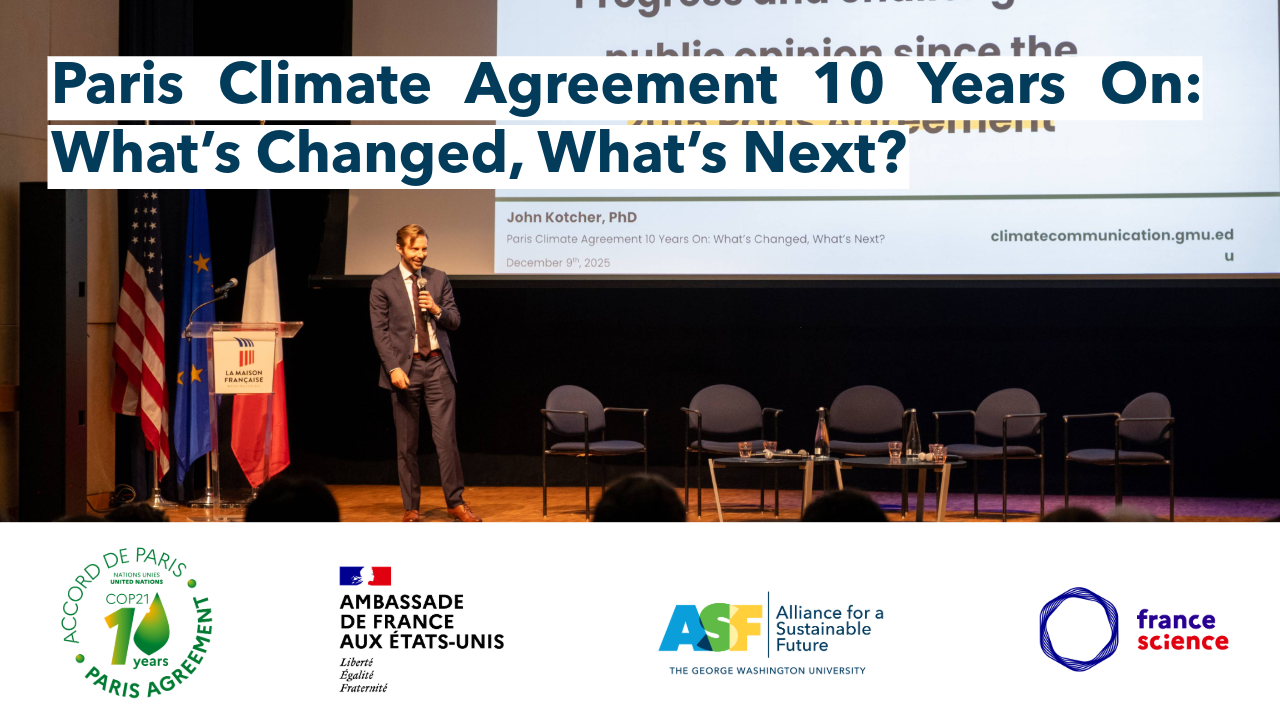
Public opinion plays a powerful role in shaping climate policy and action. This session examined how attitudes toward climate change have evolved since the Paris Agreement and the influence these shifts have on decision-making. John Kotcher, Interim Director and Research Associate Professor at George Mason University’s Center for Climate Communication, shared insights on trends and the impact of public sentiment on climate solutions.
As the world marks a decade since the Paris Agreement, this event reinforced a critical truth: progress is possible, but urgency is undeniable. From global negotiations to local action, from public opinion to private partnerships, these conversations highlighted that solutions require collaboration across every level of society. The voices of policymakers, scientists, business leaders, and students remind us that the path forward depends on shared responsibility and bold commitments to secure a sustainable future.